Liberal Hollywood Tweeted the Tr-Slur for Years. Then They Stopped.
We scanned 269 celebrity accounts from 2009-2014 and found prominent progressives casually used derogatory slurs that would end careers today.
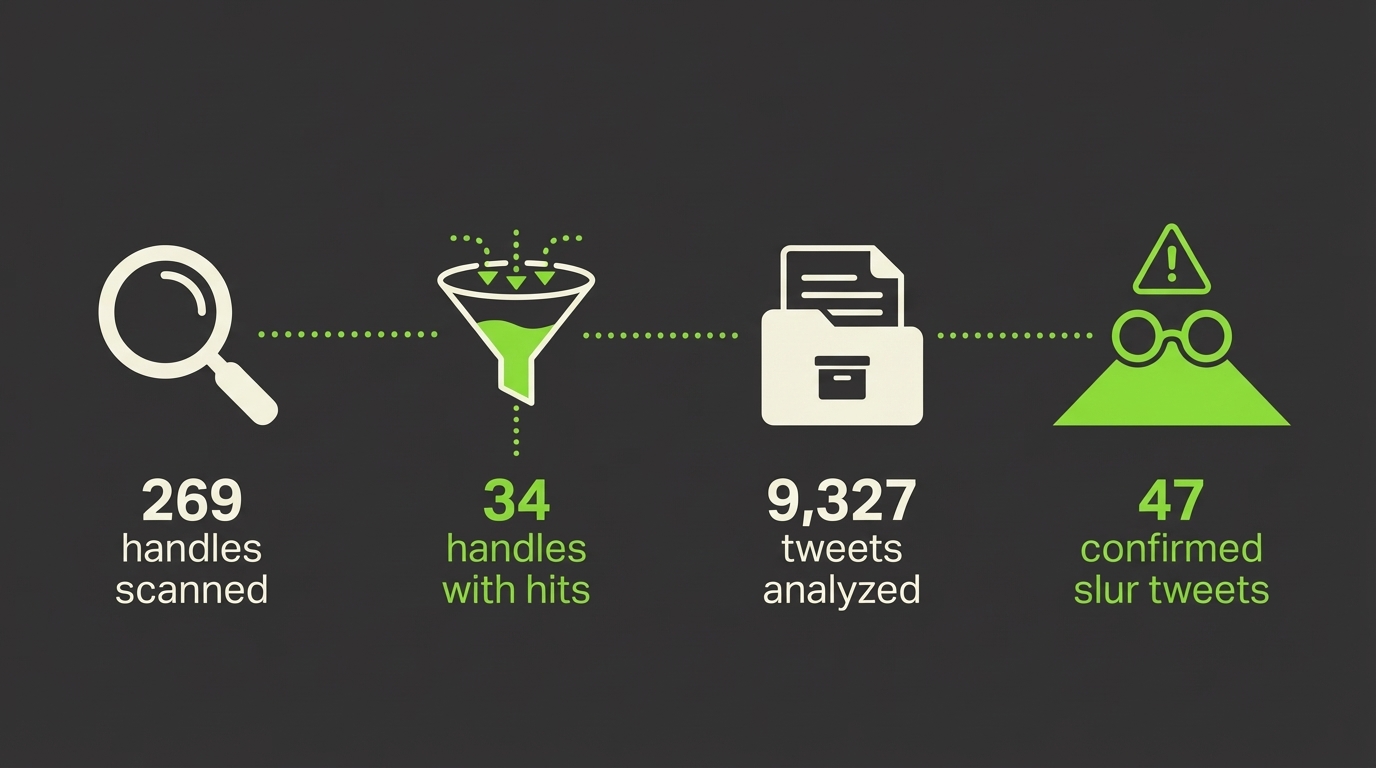
While stress-testing PublicInfo.ai, we ran digital footprint scans on 269 public figures - politicians, tech executives, media personalities, comedians, and athletes - going back to 2009. Our tool analyzed their full digital footprint across social media, public records, and web presence. This post focuses on what we found on Twitter specifically - we will cover other platforms and findings in future posts.
What surfaced was a pattern we did not expect: between 2009 and 2014, several well-known entertainers who today publicly champion LGBTQ causes casually used a derogatory term targeting transgender people on Twitter. Then, around 2014-2015, the usage stopped - without acknowledgment, apology, or deletion.
We are sharing what we found. We are not here to pass judgment - language norms shift, and people grow. But we think the data itself is worth looking at.
The Data
We ran AI-powered digital footprint analysis on 269 profiles across five categories. The right column shows how many accounts in each category were flagged for slur usage.
27 of 34 flagged accounts came from entertainment and comedy. Politicians and tech executives were universally clean - zero hits across 95 accounts. (Tools like Politwoops have archived deleted politician tweets since 2012 - they had reason to be careful. Entertainers had no equivalent watchdog.)
What We Found
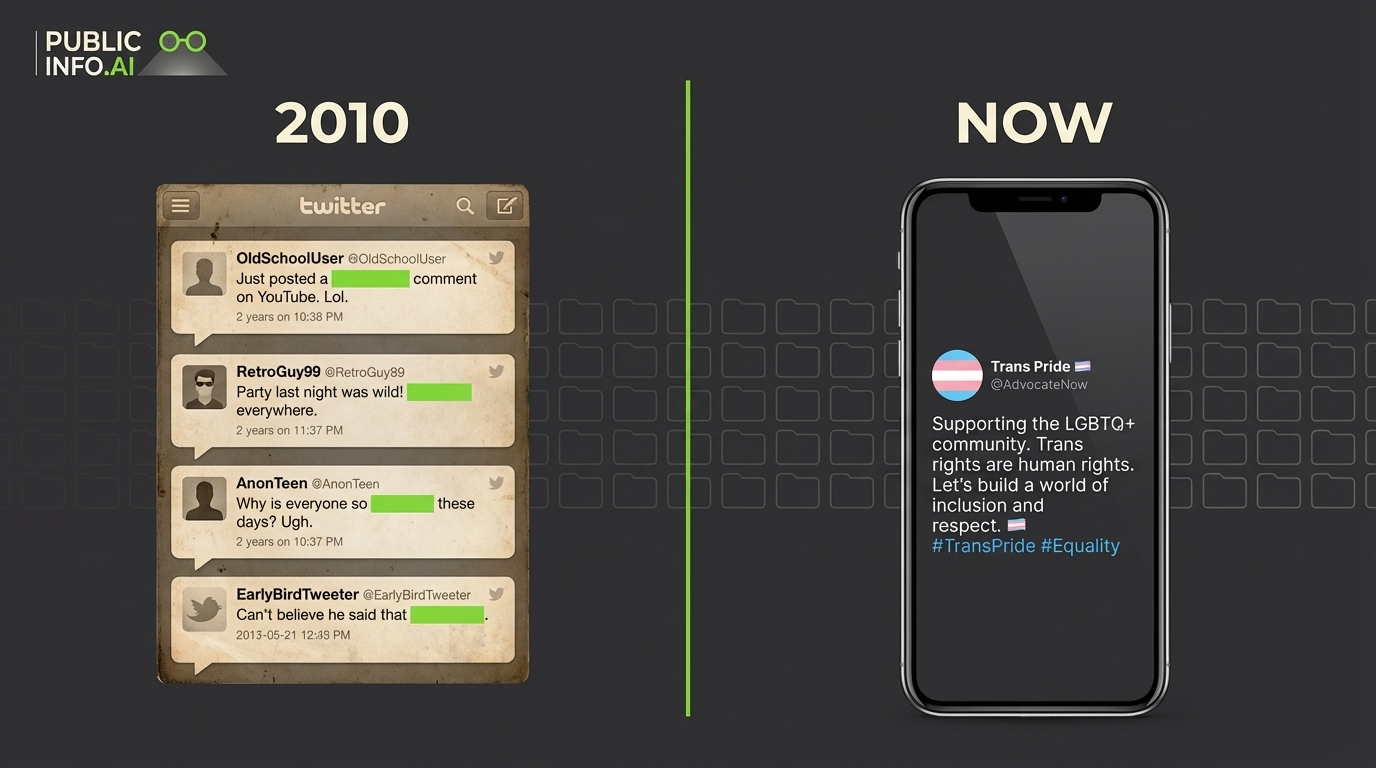
Our scan flagged 34 accounts and 47 confirmed slur tweets total. Below are 6 of the most recognizable names - selected because the gap between their past language and current public positioning is the widest. Every tweet embedded below is still live on X as of March 2026.
Kim Kardashian
| Now: Criminal justice reform advocate, Innocence Project collaborator, LGBTQ ally. |
| Previously: In 2018, she publicly apologized for using the r-word on Instagram. Yet these tr-slur tweets from 2010 were never acknowledged or deleted. |
Sarah Silverman
| Now: Social justice advocate, vocal LGBTQ ally. The f-slur tweet below has 1.5K likes. |
| Previously: The 2nd tweet was quote-tweeted by Nick Cannon in 2018. In 2025, she told Variety her past slur usage was "f*cking ignorant." Only person on this list to admit it fully. |
2 more flagged tweets from this account
Khloe Kardashian
| Now: Part of Kardashian family brand, positions as inclusive and body-positive. |
| Previously: In 2018, she apologized on Twitter for using the r-word on Instagram Live: "I will do better." This tr-slur tweet from 2009 was never addressed. |
Chelsea Handler
| Now: Progressive feminist activist, Netflix host. 5 slur categories found. |
| Previously: In 2018, Nick Cannon resurfaced her f-slur tweet below during the Kevin Hart Oscars fallout. Tweets were never addressed or deleted. |
3 more flagged tweets from this account
Bert Kreischer
1 more flagged tweet from this account
Pink
The Timeline
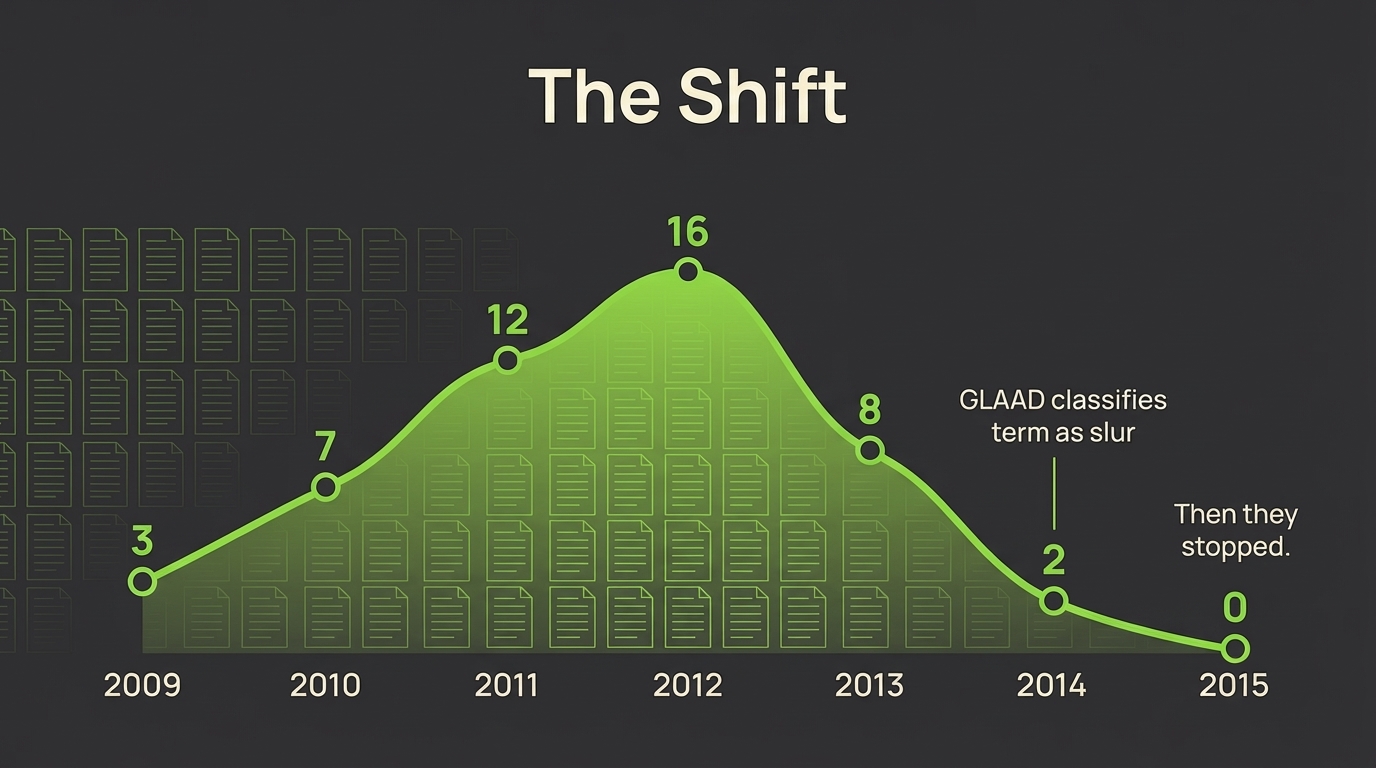
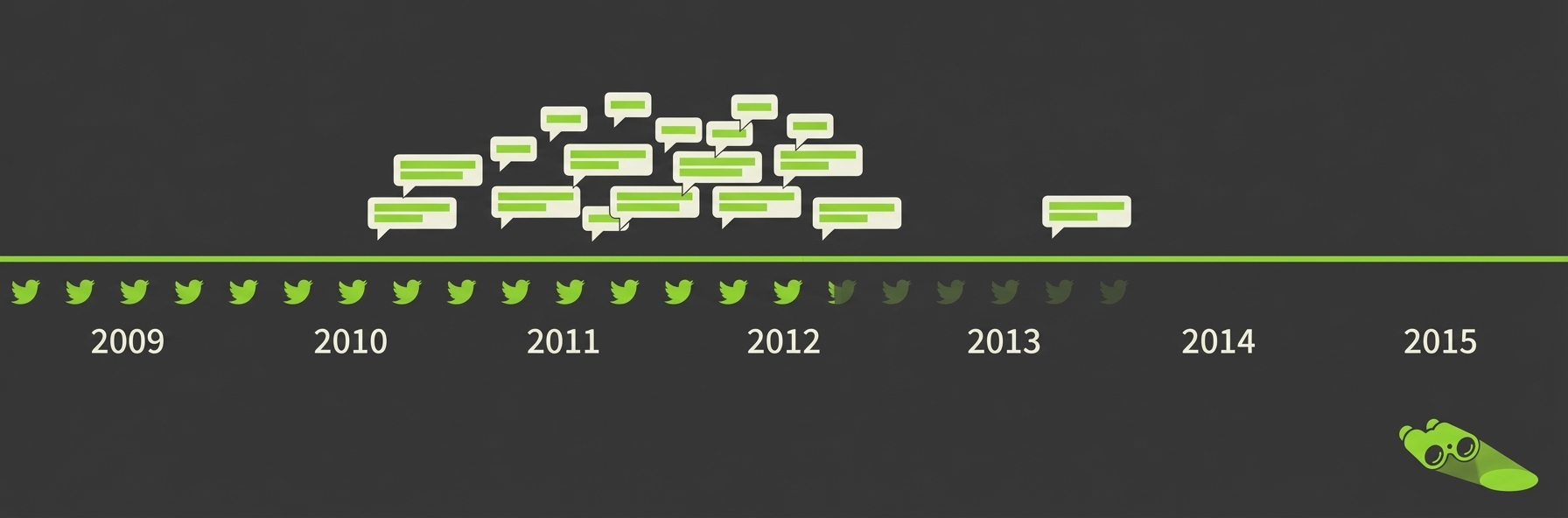
Usage peaks around 2011-2012 when Twitter was largely unfiltered by PR teams. Then comes 2014: Laverne Cox appears on the cover of TIME, GLAAD adds the term to its list of defamatory language, and Transparent premieres. By 2015, usage in our dataset drops to zero.
The timeline is not a gradual decline - it is a sharp cultural shift. What was casually acceptable one year became unacceptable the next.
A Note on Framing
We want to be clear about what this is and what it is not.
This is a dataset. We ran AI-powered scans on public social media profiles and documented what we found. These are factual observations about publicly posted content.
This is not a call for "cancellation." People change. Language norms evolve. The individuals in our dataset almost certainly do not hold the same views they held in 2010. That is a good thing.
What stands out is the pattern - not any individual tweet, but the fact that so many public figures used the same language in the same era, then stopped at roughly the same time. Some of them later apologized for other slurs when caught on camera - but the tr-slur tweets from this era were quietly left in place. Whether that selective silence represents private growth or brand management is a question we leave to the reader.
Why This Matters
The norms of 2010 are wildly incompatible with the norms of today - and that gap is now searchable across hundreds of people in a single afternoon. This post covers only Twitter. Each of the 269 profiles produced a full digital footprint report spanning multiple platforms, public records, and web presence. Other findings will be covered in upcoming posts.
How We Did This
We ran PublicInfo.ai on 269 U.S.-based public figures and filtered for slur usage on Twitter. Every flagged post was manually reviewed - we excluded posts that were criticizing or quoting slurs, non-slur contexts, and anything we could not verify.
Limitations: Historical social media data has gaps - platforms limit access to old content and we almost certainly missed posts. These findings are a floor, not a ceiling. We did not scan conservative figures with equal rigor - this study focused specifically on the contrast between current progressive positioning and past language.